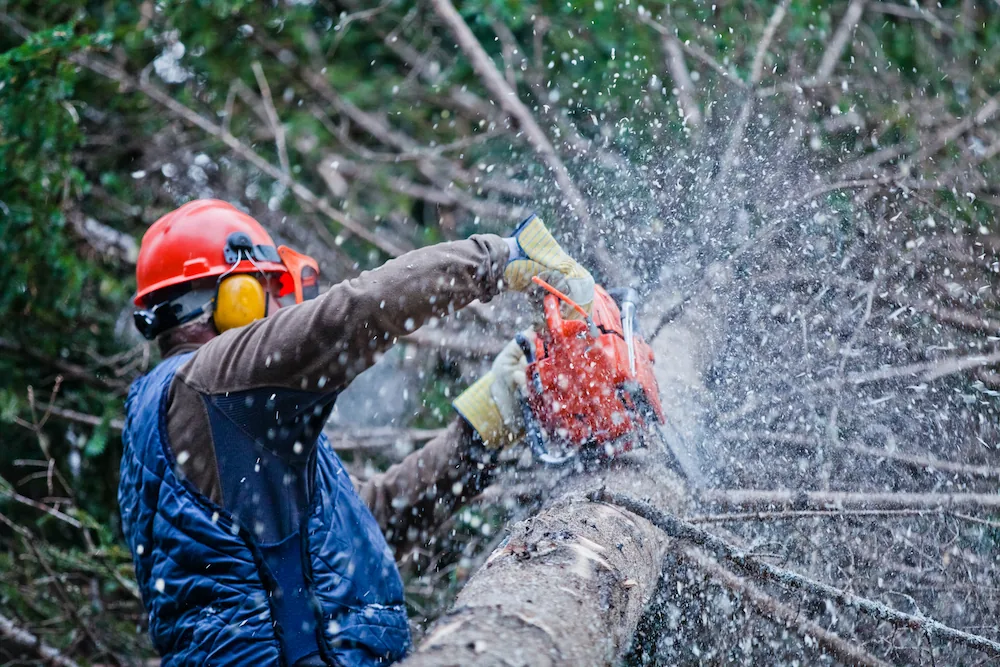
Tree Removal
Whole removals and sectional dismantles, from a dead wattle in a courtyard to a blue gum over a roof.
Learn more →Removals, lopping and stump grinding from Penrith to Bondi, with the council question answered before the saw starts.
Tree Loppers Sydney arranges tree removal, tree lopping, pruning, stump grinding and stump removal for houses, strata blocks, builders and commercial sites across greater Sydney. That covers the sandstone gullies of the North Shore and the Northern Beaches, the shale flats out through Western Sydney and South West Sydney, the tight terrace streets of the Inner West and Eastern Suburbs, the acreage of the Hills District and the coastal blocks of the Sutherland Shire.
The first question on any job is not how the tree comes down. It is whether it is legally allowed to come down at all.
Sydney has no single tree law. Each council writes its own tree preservation order into its development control plan, and the differences are sharp enough to change the answer completely from one suburb to the next.
Ku-ring-gai and Woollahra sit at the strict end. In Ku-ring-gai, a tree of very modest size is regulated, the Blue Gum High Forest and Sydney Turpentine-Ironbark Forest remnants carry protection on top of the ordinary rules, and the council enforces. Woollahra is similarly protective of its street-tree and garden canopy. At the other end, Penrith, Blacktown and Campbelltown apply larger size thresholds and longer exempt-species lists, so a job that would need a full application in Pymble may need nothing at all in Cranebrook.
A crew that turns up and starts cutting without checking is a crew that can leave you holding a fine measured in tens of thousands. We would rather lose the job than be the reason for that.
Sydney's two soil stories decide how a tree behaves and how it has to come out. On Hawkesbury sandstone — the ridges and gullies through the North Shore, the northern beaches escarpment, Menai and the upper Shire — angophora, Sydney peppermint and scribbly gum root into rock crevices with a shallow, wide plate. They hold on well and they lift paving when they fail. On Wianamatta shale, through the Inner West, the Hills and out west, heavy clay grows enormous Sydney blue gum and forest red gum, with deeper roots, heavier timber and more shrinkage movement under footings in a dry summer.
Then there is camphor laurel. It is a declared weed in much of NSW, it is everywhere in the Inner West and the lower North Shore, and it is usually the easiest removal approval you will ever get. The wood is soft, the canopy is heavy and wet, and it drops limbs without warning.
The regular work is tree removal where a tree is dead, failing or in the wrong place, lopping and reduction pruning to take weight off limbs over a roof or a pool, and stump grinding or removal afterwards so you can turf, pave or pour footings over the ground.
What we will not do is top a healthy tree because it is tall. Cutting a mature eucalypt back to bare stubs triggers a flush of weakly attached epicormic regrowth that is more dangerous in five years than the original tree, voids most arborist warranties, and on a protected tree is an offence in its own right. If reduction is the wrong answer for your tree, expect to be told so.
Ring (02) 9000 1943 and describe what you have: species if you know it, rough height, what is underneath it, and how a crew would get to it from the street. That last detail moves the number more than anything else. If you want to understand the drivers before you call, the tree removal cost guide sets them out, and the frequently asked questions cover permits, green waste and powerlines. For a look at the kinds of jobs that come up, see recent projects.
Ku-ring-gai and Woollahra protect almost everything; Penrith and Blacktown are far more permissive. We tell you which rule book applies to your address before anyone quotes a cut.
A gum on Hawkesbury sandstone holds with a shallow plate of roots in rock crevices. The same species on Wianamatta shale sits in heavy clay. The two come out very differently.
Terrace streets, battle-axe handles and 900mm side gates are the real cost driver in Sydney, not trunk diameter. We quote on how the timber gets out.
Anything inside the approved clearance zone around a live Ausgrid conductor is reported to Ausgrid, not cut by a tree crew. We will say so rather than take the job.
Whole removals and sectional dismantles, from a dead wattle in a courtyard to a blue gum over a roof.
Learn more →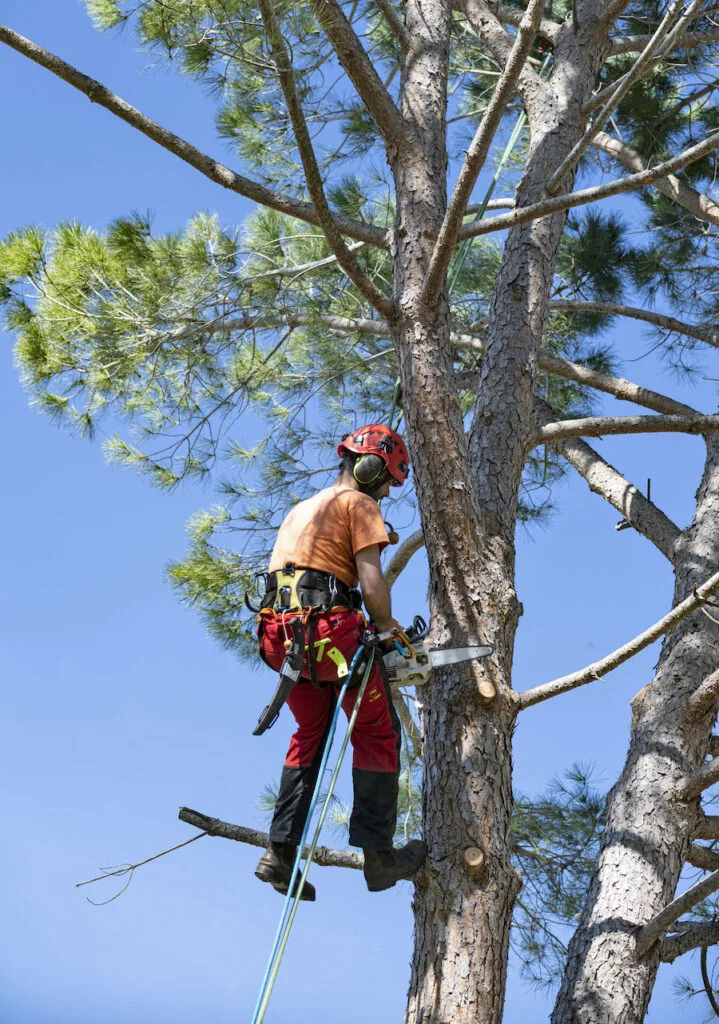
Crown reduction, deadwooding and clearance pruning done to AS 4373 so the tree survives the cut.
Learn more →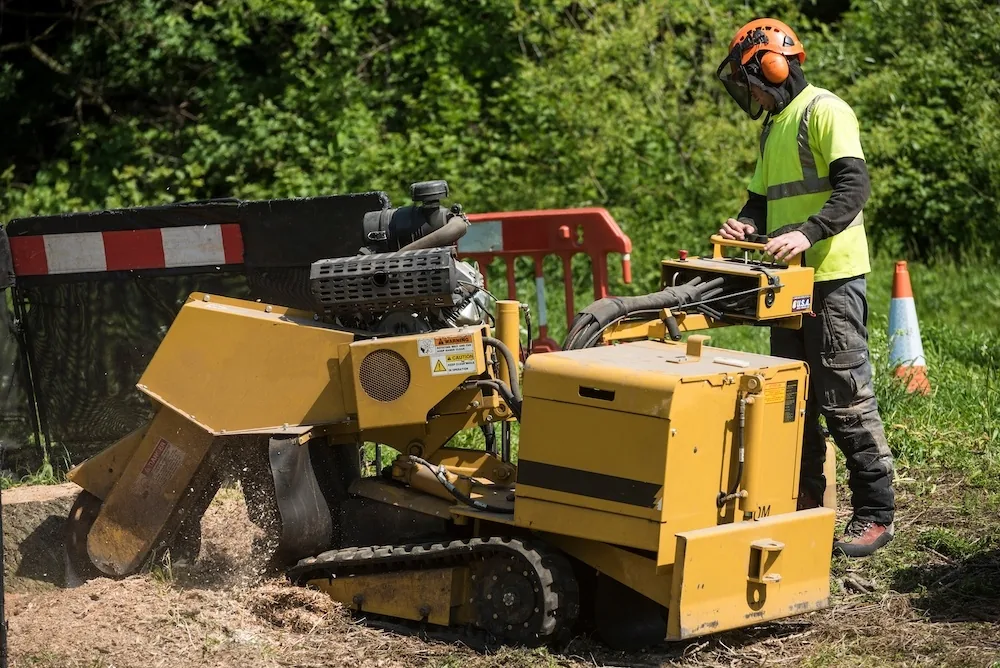
Grinding below grade, or full excavation of the root plate where footings and pipes need clear ground.
Learn more →Usually yes, and which approval depends entirely on your address. Every Sydney council runs its own tree preservation order through its development control plan, and they are not consistent. Ku-ring-gai and Woollahra protect almost anything of size. Penrith and Blacktown are far more permissive. We check your council's rules and the exempt species list before quoting any cut.
The NSW 10/50 vegetation clearing entitlement lets you remove trees within ten metres of a home and clear underlying vegetation within fifty metres, but only if the property sits inside a mapped 10/50 entitlement area near bushfire-prone bushland. Check your address on the NSW Rural Fire Service online tool first. Outside those areas the ordinary council rules still apply in full.
It depends far more on access than on the tree. A small tree in an open front yard is a different job from the same tree behind a terrace with a 900mm side gate. The blog guidance on this site quotes roughly two hundred to five hundred dollars for a small tree and eight hundred to two thousand or more for a large one. Get the quote on site.
Branch material goes through the chipper on site and leaves with the truck, unless you want mulch dropped on the garden beds, which costs nothing extra. Trunk wood is cut into rounds and carted. If you want firewood lengths left stacked, say so before the crew starts so they cut to length rather than to whatever fits the tipper.
Only outside the approved clearance zone around live Ausgrid conductors. Work inside that zone needs an accredited service provider and, in most cases, a scheduled outage arranged through Ausgrid. If your tree is in the wires we will tell you to report it to Ausgrid rather than book a crew, because that call is free and ours would not be.